Updated:
The Mykonos Airport (JMK) terminal is a single building that punches above its size: expanded by about 50% to 13,350 m² in a €25M project, styled after the island's pigeon houses, and — new for 2026 — home to two lounges. Inside you get 16 check-in counters, 7 gates, 5 security lanes, a compact duty-free with online pre-ordering, free Wi-Fi and charging, and full accessibility services. Here is the floor-by-floor reality, so you know what to expect and what not to.
Layout and design: a dovecote that handles jets
The terminal's identity comes from the 2021 renovation, which modelled the building on traditional Mykonian pigeon houses — whitewashed geometry that signals «Cyclades» the moment you step off the aircraft. The recent expansion added a new 2,000 m² arrivals zone in the same style plus extra gate space. The airport itself opened in 1971 and has been run since late 2015 by Fraport Greece (which took over 14 regional Greek airports); despite ranking among the top 10 busiest airports in Greece, it remains a one-terminal operation — international and domestic under the same roof.
The lounges: Delos and the Goldair lounge
This is the terminal's newest upgrade. «Your Mykonian Luxury Lounge» by Goldair Handling sits at domestic departures on the 1st floor and runs seasonally from 1 May to 15 October 2026. Inside: a welcome reception with flight information, a business corner with free Wi-Fi and satellite TV, and a Greek-gastronomy spread — cold dishes, snacks and desserts, hot and cold beverages, premium drinks and wines from Greek producers. Entry is sold per visit and through lounge-access programmes.
The Delos Lounge is the premium tier: part of Fraport Greece's VIP services, built for private-aviation passengers and anyone buying the full package — fully private boarding, fast-track escort to the aircraft, and a Mykonian-style salon away from the main hall. Separately from both lounges, several providers sell plain fast-track through security and passport control; in the July–August departure waves that fee buys real minutes.
Shops and duty-free: small but with a trick
Shopping is limited and deliberately curated: a compact duty-free store, a jewelry boutique, a telecom shop, an eyewear store and a fashion-and-accessories outlet. The trick worth knowing is «Reserve & Collect» — pre-order duty-free products online and pick them up at the airport shop, which beats hoping a small store has your item on the day. In low season, expect several outlets to be closed entirely.
The arrivals side of the building
Landing passengers get the newest part of the terminal: the 2,000 m² arrivals zone added in the expansion. The flow is short. Deplane — often onto the apron with a walk or short bus ride. Baggage reclaim is a single small hall; bags from a packed summer wave can take a little while. Then the landside area, and this is where the useful stops are: an ATM (take cash here — most taxi drivers do not accept cards), and the car-rental desks of Avance, AVIS–Budget, Hertz and Sixt, with the cars parked just outside the building. Step out to the forecourt and everything is within sight: the taxi rank, the transfer meeting point, the KTEL bus stop and the short-stay parking. No trains, no inter-terminal shuttles, no second building. It is one of JMK's genuine advantages — nothing is more than a three-minute walk from anything else.
Practical services: the things you actually need
The essentials are all present and reliable: a 24/7 currency exchange office, an information desk, and ATMs — genuinely important here, because most Mykonos taxi drivers take cash only. Connectivity is free: join the «Fraport-Free» Wi-Fi network, and use the complimentary charging points scattered through the building. Seating landside is limited, which is one more reason not to arrive five hours early; the timing maths for departures is in our departures guide.
Eating, drinking and waiting
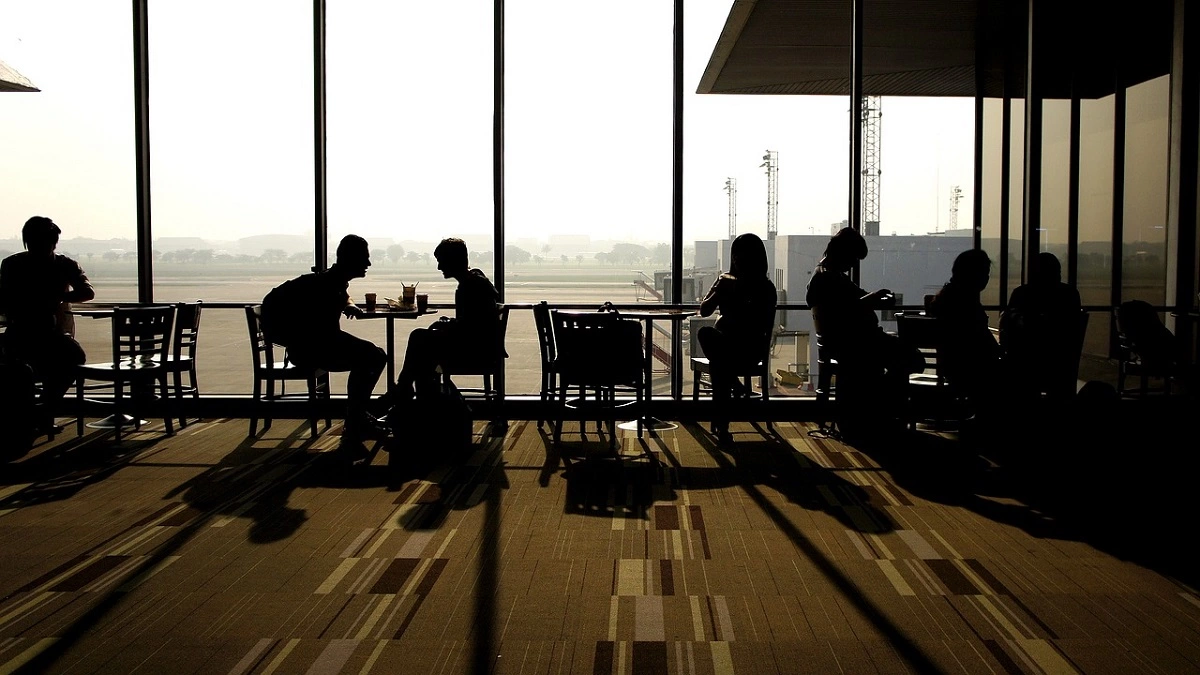
Set expectations correctly. This is not a hub with food courts. A few cafés serve coffee, sandwiches and snacks — enough for an hour or two, not for a long evening. Prices are airport-level. Seating is the real constraint: landside it is limited, and in an August departure wave people stand. Airside is calmer. In winter, several outlets close completely and the building can feel almost empty. The fix is simple. Time your arrival sensibly, eat in town beforehand, and if you want comfort on a peak day — that is exactly the problem the two lounges were built to solve.
Accessibility and assistance
The terminal is fully accessible: ramps, adapted restrooms for passengers with reduced mobility, and a special-assistance service for travellers who need support. As everywhere in the EU, assistance is free but should be requested through your airline at least 48 hours before the flight — at a seasonal airport with peak-day crowds, that pre-notice matters more than at a big hub.
How the building copes with summer
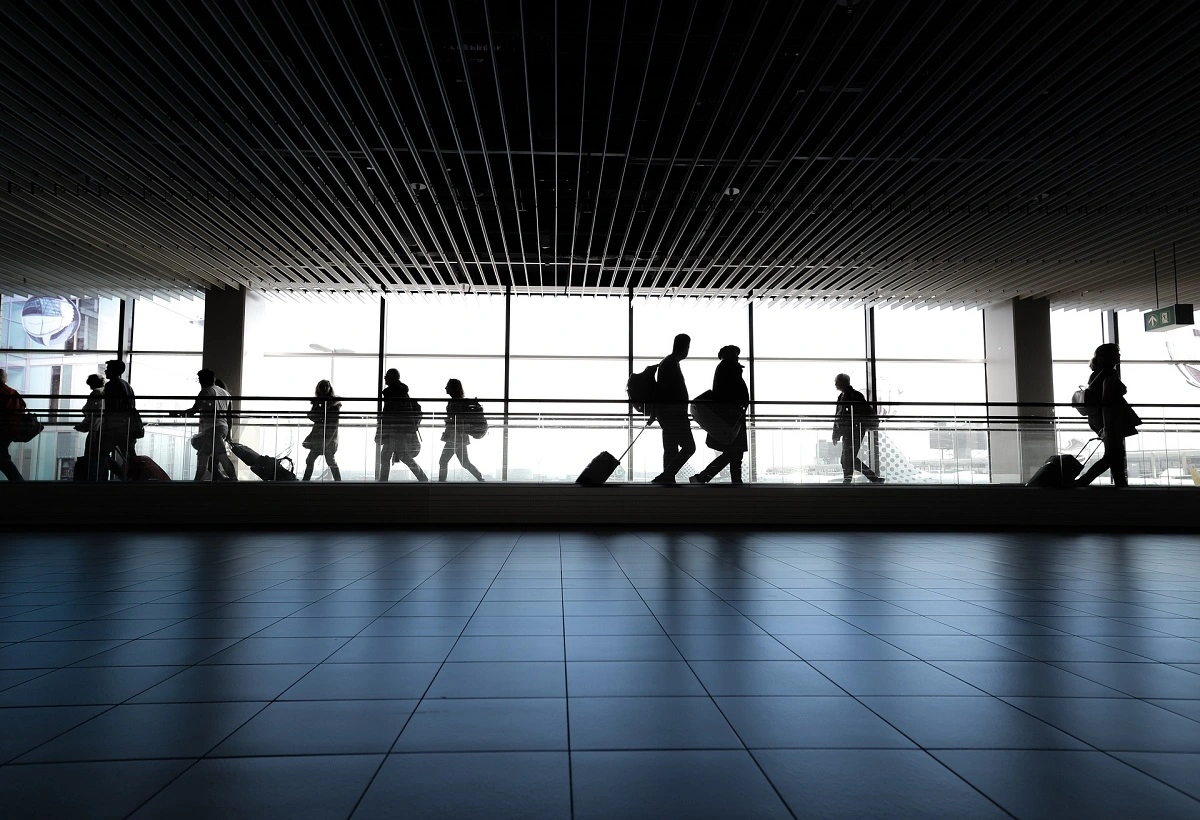
Capacity is the honest caveat: 16 check-in counters, 7 gates and 5 security lanes serve an airport that connects to 49 destinations in summer 2026. The expansion relieved the worst of the old crush, but when several flights board at once the security queue still grows fast — be inside the building 2–3 hours before an international departure in peak season. Construction may also be visible around the airfield: Fraport's wider modernisation phase (runway reconstruction across several Greek regional airports) has been running since November 2025. For the bigger picture of the airport — transport to town, live boards, passport rules — start at the Mykonos Airport guide, and if you are landing rather than leaving, see what awaits in arrivals.